When Quality of Life Becomes the Value People Seek
As quality of life becomes an increasingly important value for people, creating spaces that truly support the way they live, building meaningful relationships with communities, and growing alongside the future have become essential questions for Anawat Chatchaisirikul whenever he sets out to develop a project.
Ultimately, there is one question that must always be answered: “Who are we building this for?”
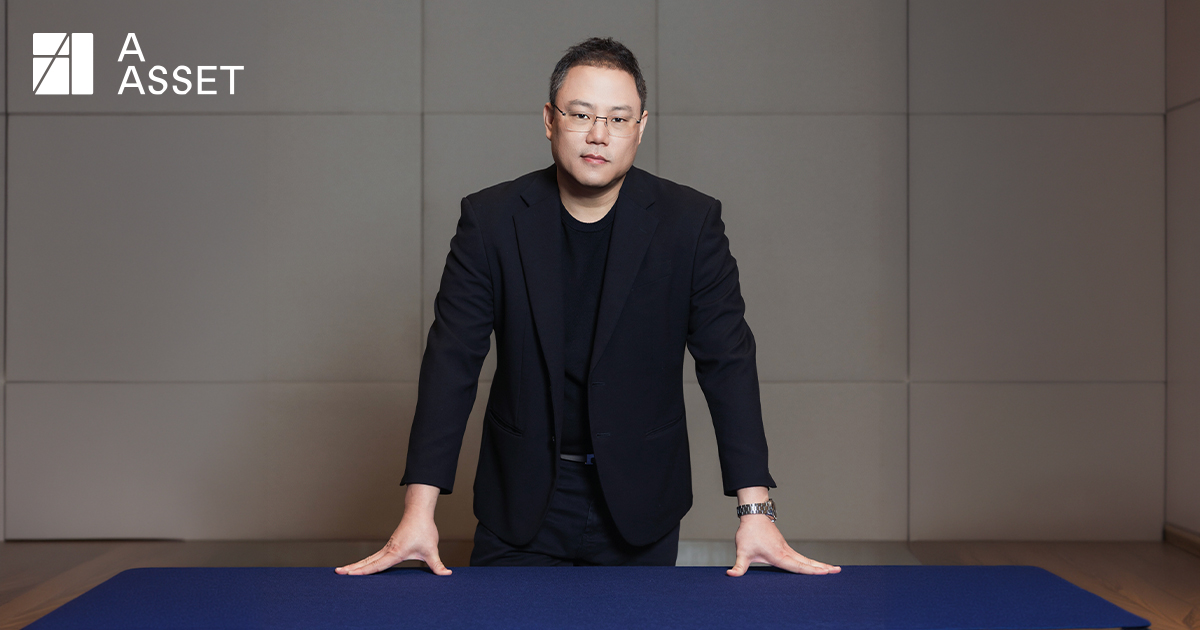
Today, we take a closer look at A Asset, a new-generation real estate developer founded by Anawat Chatchaisirikul, Chairman of A Asset Group. Throughout our conversation, he does not talk about sales figures or competition. Instead, he speaks about people, systems, and a way of thinking.
From Engineering to the Architecture of Life
While A Asset may still be a relatively new name in Thailand’s real estate industry, its foundation did not begin from zero.
The organization grew from a background in engineering, project management, and real estate development experience across Thailand, Japan, and Vietnam. This includes more than three decades of professional engineering consultancy and construction management experience through PPSN, as well as real estate development and construction experience in Vietnam through BCONS.
Years of experience in design, project management, and construction supervision have become an important part of A Asset’s DNA—shaping a perspective that encourages its people to look beyond conventional ways of thinking.
For many people, childhood memories may be built around playgrounds. For Anawat, however, his learning environment was often a construction site.
His father, who was an educator, engineer, and business owner of an engineering company, exposed him from an early age to construction drawings, project sites, and engineering problem-solving.
“I grew up around construction sites. I saw everything from the moment a structure had yet to take shape. I saw the processes, how problems were solved, and what was inside a building before it eventually became a home, an office, or another type of space.”
Later, as he entered the engineering profession and worked alongside highly experienced teams, he gained exposure to a wide range of projects—not only as a designer, but also as a project manager and construction supervisor.
These projects ranged from small residences and apartments to condominiums, hotels, shopping malls, educational institutions, urban infrastructure, large-scale mixed-use developments, and even master-planned cities.
Working across such a diverse range of projects taught the team that many things could be approached differently.
Because, as Anawat puts it: “If we want a different outcome, we have to start by thinking differently.”
This became an important turning point—from being an engineer responsible for developing projects for others to imagining what he might create himself one day, given the opportunity to build something he truly believed in.
Interestingly, Anawat has never defined himself primarily as a real estate developer. He sees himself first and foremost as an engineer.
And perhaps that is precisely what makes his perspective different.
“The structural work beneath the ground or behind the walls is what determines whether a house will stand the test of time—or become a burden for the people who live there in the future.”
For most people, a space might begin with the living room, bedroom, office, garden, or common area.
For him, however, a building begins with the way we think and the systems behind it—especially the systems people cannot see, whether hidden beneath the floor or behind the walls.
Because ultimately, these invisible details can determine the quality of life people experience decades from now.
Lessons from Two Cultures That Shaped a Developer’s Way of Thinking
Another significant influence on Anawat’s perspective came from his experiences abroad, particularly in Vietnam.
At a time when many people had yet to recognize the potential of the Vietnamese market, he chose to study the country and work there seriously.
“When I first went there, the country still felt very open and undeveloped, but there were so many people. I immediately thought, ‘This place is going to grow.’”
What impressed him most about Vietnam was not simply its economic potential, but the attitude of its people.
He recalls one construction site visit several years ago. Dozens of engineers and team members followed him around the site, listening carefully to his observations and suggestions.
When he returned two months later, he found that almost all of the ideas he had shared had been put into practice.
The previously disorganized construction area had been reorganized. Workers’ welfare had improved. Processes had become clearer and more systematic.
Experiences like these gradually led him into large-scale development projects in Vietnam under BCONS, which has since grown into one of the country’s continuously expanding real estate developers.
As the projects became larger, the challenges became more complex.The thinking evolved from a single building to the development of entire urban environments—from individual projects to cities and the broader ecosystem of living.
And once again, a new question emerged:
“Are we building buildings, or are we building quality of life?”
Japan offered another important lesson.Through initiating and working on projects there, Anawat absorbed a different way of thinking—one shaped by a culture that, in his words, “thinks long term about everything.”
He believes Japan’s advancement in real estate is not driven by technology alone, but by a culture of meticulous thinking, attention to detail, careful planning, maintenance, and consideration for the future.
Sometimes, a discrepancy of only a few centimeters can become critically important.A small problem today can become a major cost tomorrow.
“There was a project in Japan where we decided to spend another six months, increase the budget by more than ten million baht, and commit additional manpower just to correct a small discrepancy of around 2–10 centimeters while it was still on paper or in the blueprint. It was better to fix it then than allow a small mistake to grow into a major problem on site—and ultimately force residents to spend years dealing with it.”
This philosophy eventually became what the team calls “The 10-Centimeter Philosophy.” Because details that people may never notice can have a profound impact on quality of life. And the difference often comes down to a decision we make today, at the very beginning.
Sustainability, Legacy, and Transparency: The Foundation of Care
The working cultures of these two countries have shaped Anawat’s perspective and gradually become part of A Asset’s organizational DNA. When asked how he believes the real estate industry should evolve in the future—and what principles he intends to apply to A Asset—his answer is clear.
1. Sustainability
Sustainability means developing projects responsibly, without leaving residents with unnecessary maintenance burdens in the long term. It means designing buildings that are durable, practical, and easy to maintain.
2. Legacy
Legacy is not simply about leaving an inheritance for the next generation. For A Asset, it means creating places that are friendly, meaningful, and valuable enough for future generations to live in and enjoy.
3. Transparency
In an era when information is everywhere, honesty and transparency have become more important than ever. It means being willing to share how things are done, take responsibility, and engage openly with society, communities, and the people around us.
“Sustainability is not only about the environment. It is also about not creating a burden for residents and communities. A good home should be easy to maintain, have reasonable long-term costs, and retain its quality over time. We have to think about how people will maintain the building 20 years from now.”
This idea comes up repeatedly in his thinking because he believes future costs are something developers should consider on behalf of residents. The materials selected, systems installed, and spaces designed—all of these decisions should be made with the future in mind.
Starting with People. Moving Forward Through Creativity and Sustainability.
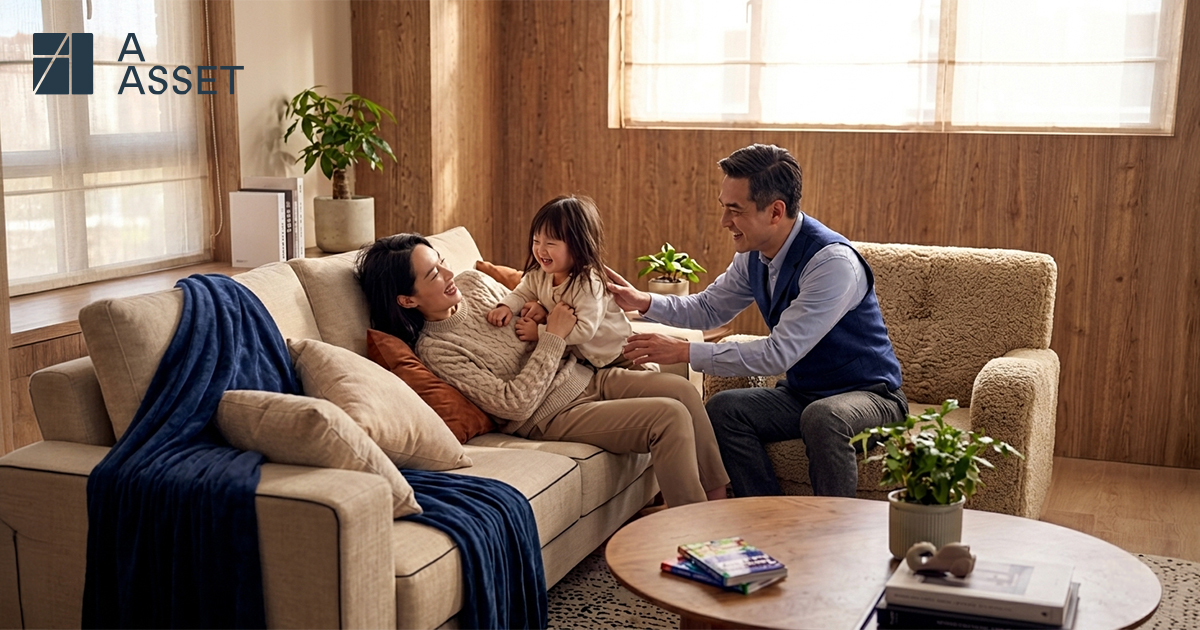
The same philosophy applies to the growing focus on well-being in real estate. For Anawat, well-being does not begin with a swimming pool, fitness center, or clubhouse.It begins with people.
He believes that care can be passed from one person to another—from the organization, to its people, to the projects they create, and ultimately to the residents who live there.
“If the people working behind the scenes are happy, they can create homes that are filled with care. I believe everything starts with people. When people have a good quality of life, communities become better, the environment becomes better, and sustainability follows naturally.”
Even when it comes to green spaces—something the real estate industry increasingly recognizes as essential—Anawat summarizes his perspective simply: “Good green space has to be genuinely usable, comfortable, and manageable over the long term.”
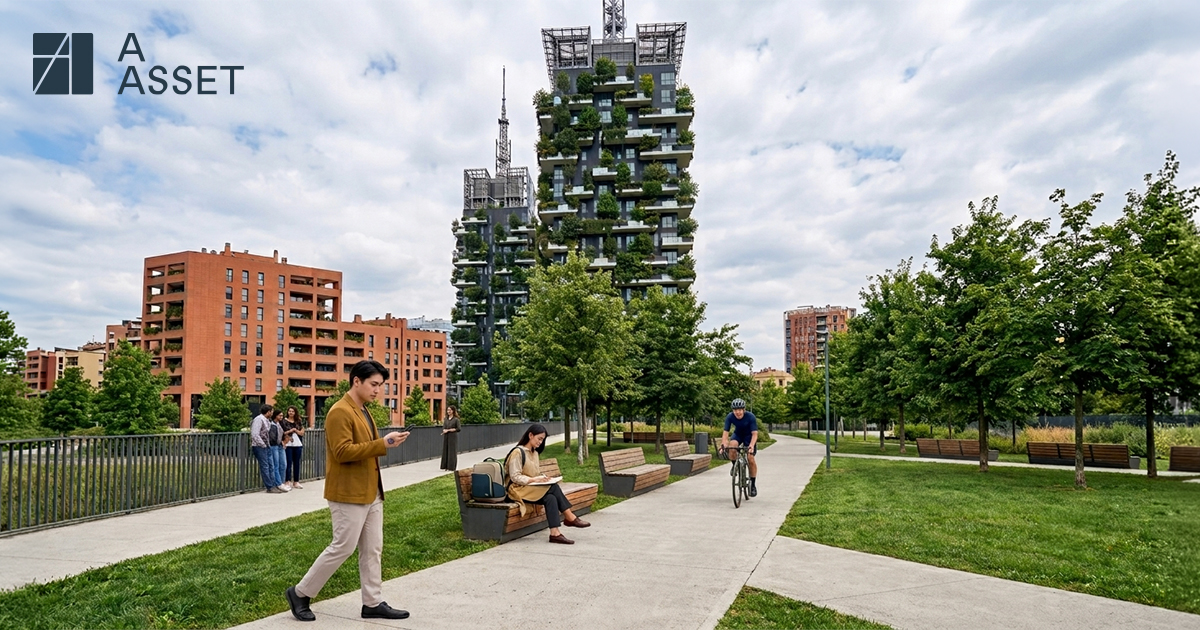
This reflects how A Asset looks beyond the people living inside its projects. Its perspective extends to surrounding communities, neighborhoods, and cities—particularly public spaces.
Having experienced the transformation of cities through many different stages of development, Anawat believes that a good city must be alive. People need places to meet, connect, and spend time together.
And those spaces should create value not only for individual residents, but for society as a whole.
ALWAYS FORWARD: Thinking Beyond Today
This is perhaps where the deeper meaning of A Asset’s brand philosophy, ALWAYS FORWARD, becomes clear. Moving forward is not simply about growing bigger. It is about moving forward with the intention to create sustainably—to do our best every day so that future generations can enjoy a better quality of life.
It is about creating things that can be passed forward. And ultimately, it is about helping create cities that are better places to live. Perhaps this is why A Asset chooses to “think in detail.” Not because details are what make a building look different. But because the smallest details we make decisions about today may eventually become the quality of life someone experiences tomorrow.